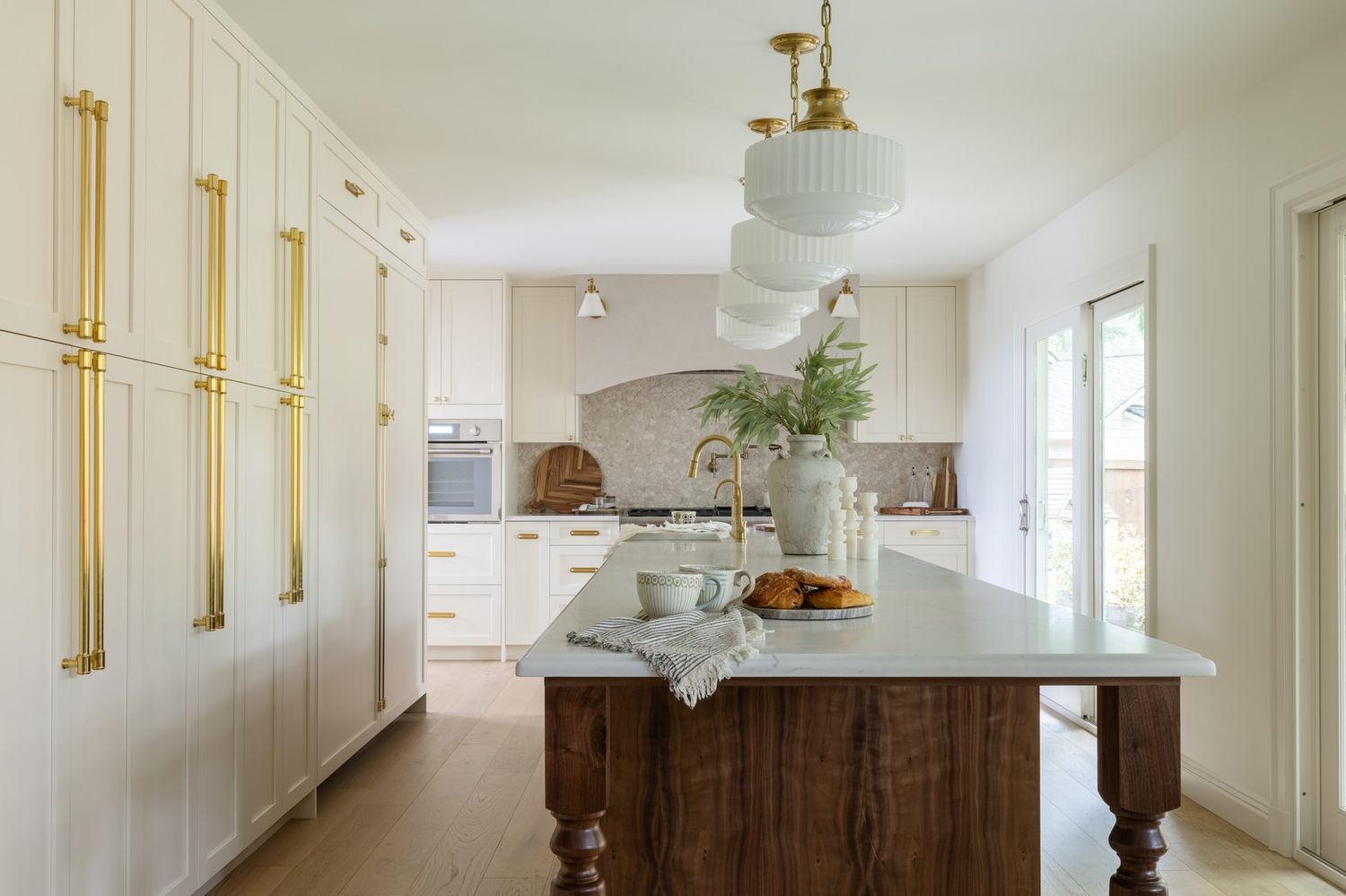
Traditional detail has a reputation problem. Done carelessly it reads dated — heavy, fussy, a decade behind. Done with discipline it does something no minimal interior can: it makes a new house feel like it has been there a while.
The Strauss Residence is our argument for the second version.
The island as a piece of furniture
The perimeter cabinetry is inset, painted, and quiet. The island is not — it's dark wood with turned legs and a stone top, sitting in the room like a table somebody moved in rather than a run of cabinets that happened to stop.
That contrast does real work. It breaks up what would otherwise be an unrelieved wall-to-wall kitchen, and it gives the open plan a center that reads as a room, not a corridor.
One shape, used more than once
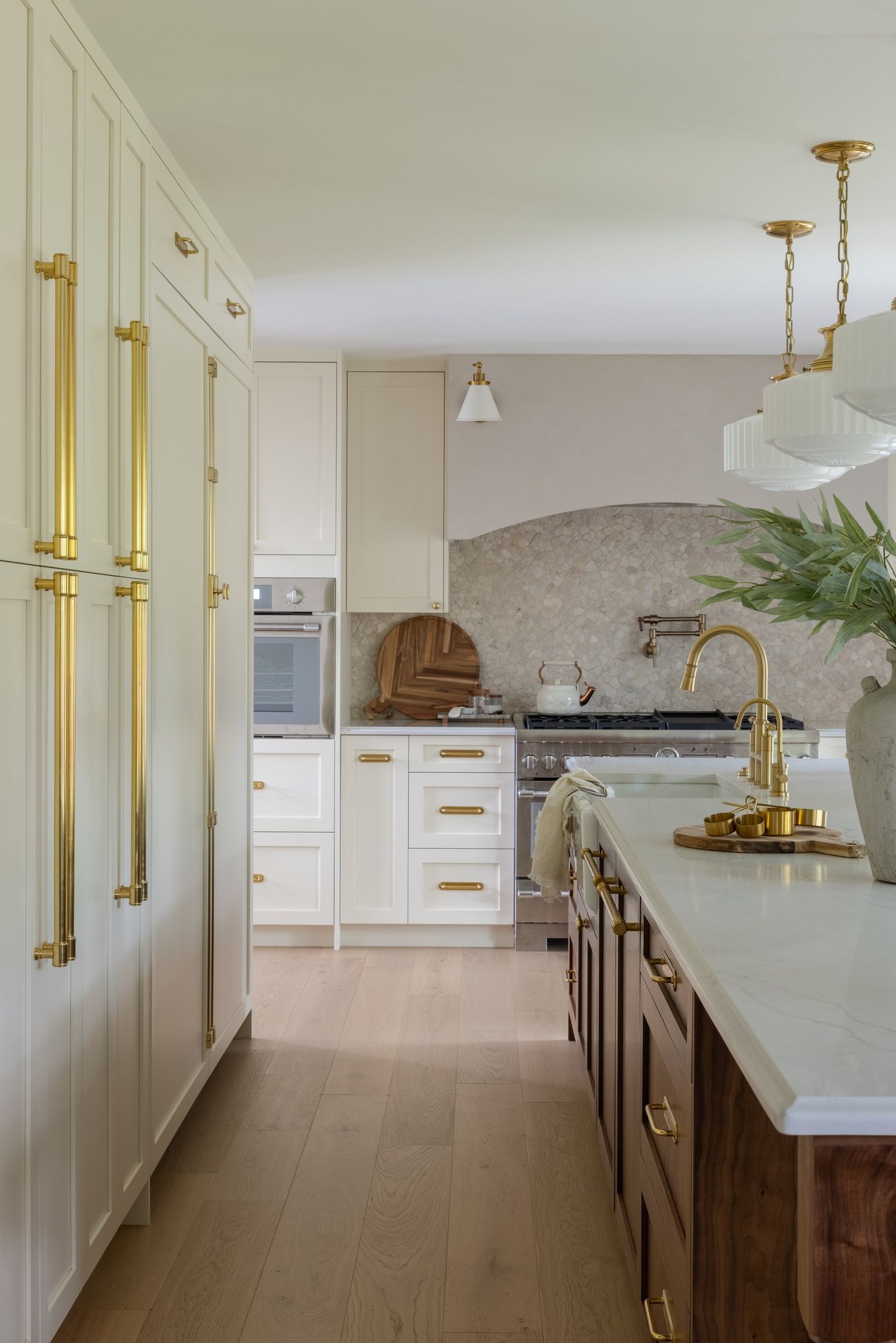
There's an arch over the range and an arch at the opening into the dining room. Two instances, same family of curve.
A detail used once is decoration. A detail used two or three times in the same house becomes a language — the eye picks it up on the second appearance and starts reading the plan as intentional.
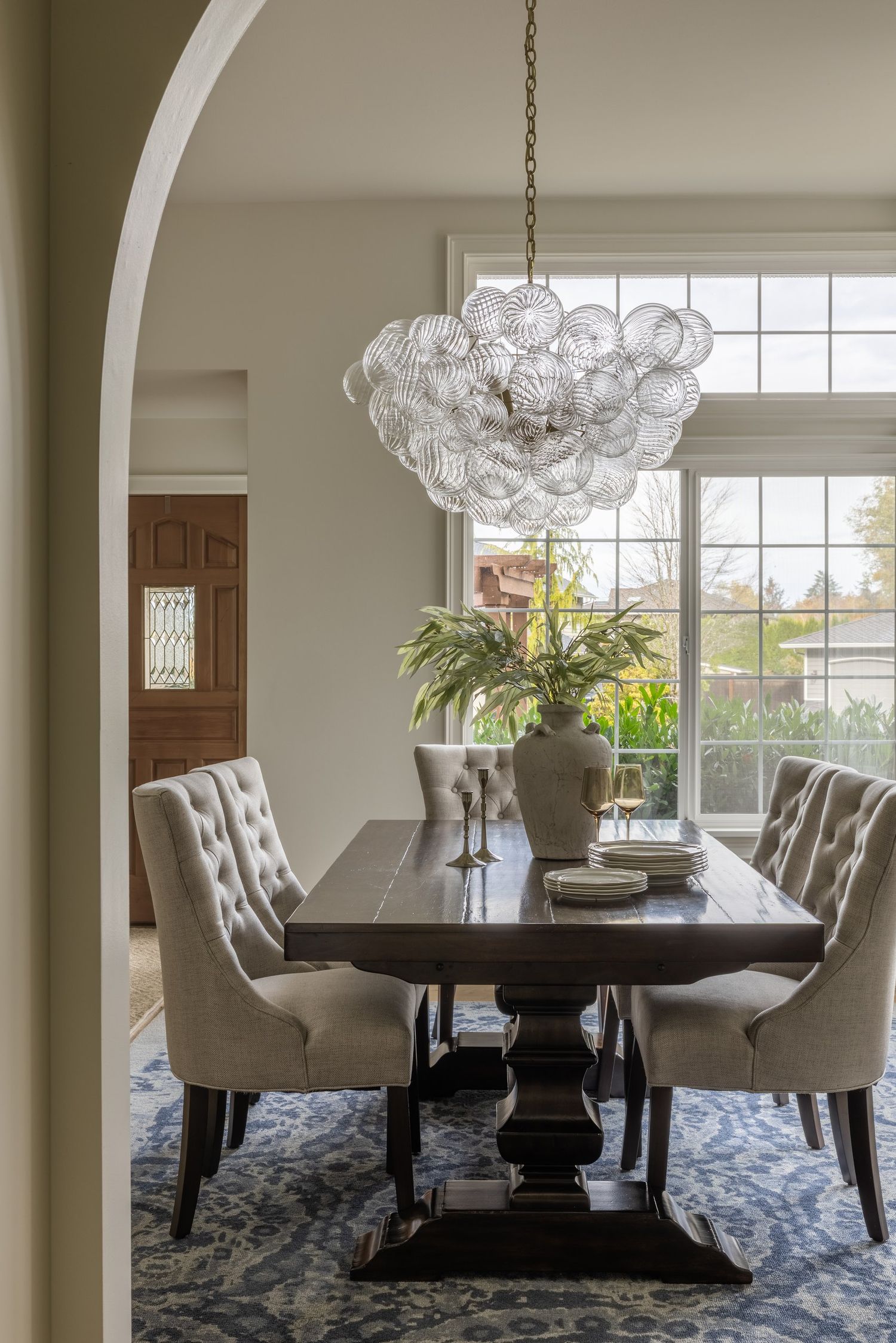
Cabinetry that goes all the way up
Running the cabinets to the ceiling is one of the highest-return moves in a remodel. You gain real storage, you lose the dust ledge, and — most importantly — the wall reads as architecture instead of furniture parked against plaster.
The long brass pulls do the rest, drawing the eye vertically and making a nine-foot wall feel taller than it measures.
Two metals, two rooms, no confusion
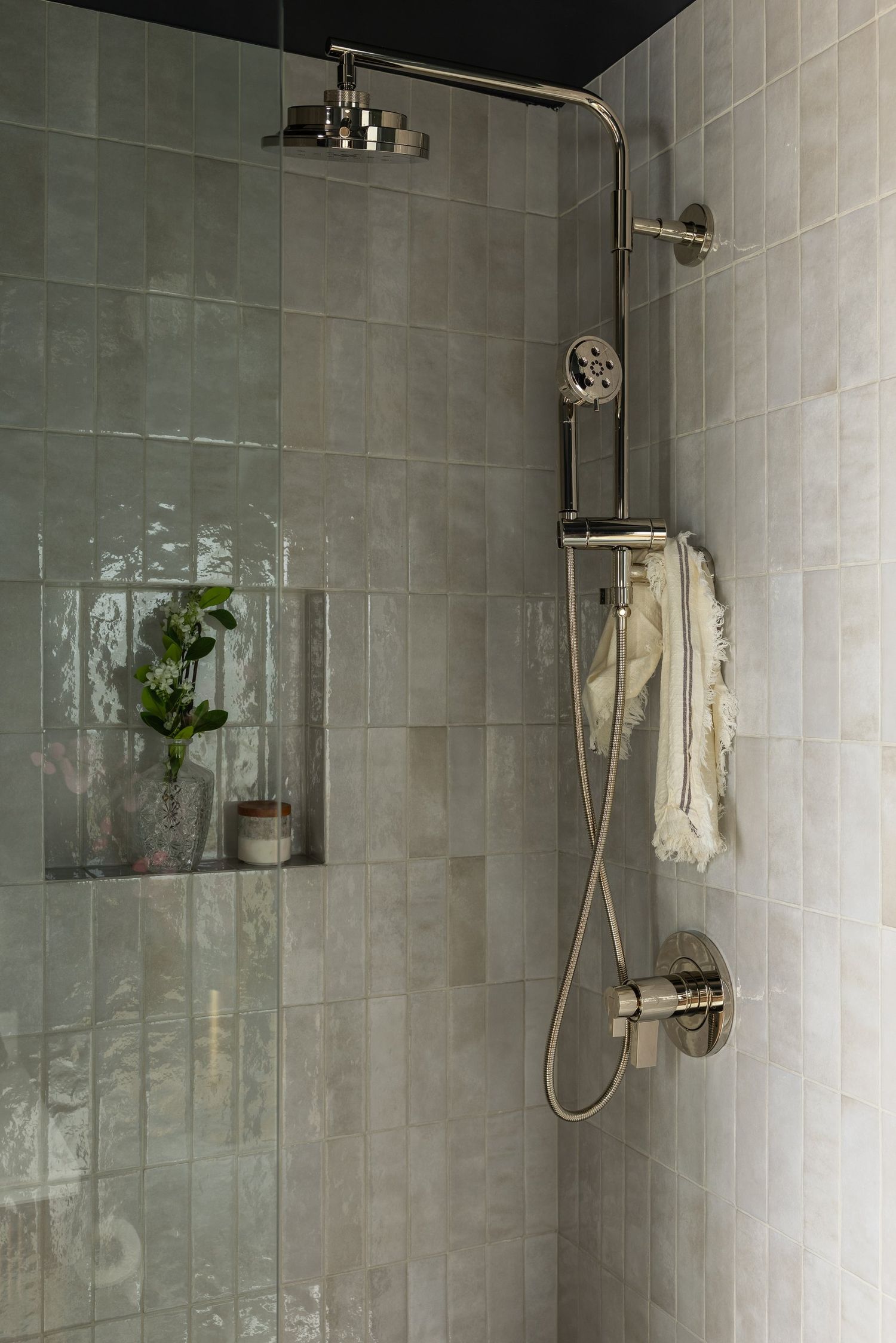
Brass in the kitchen. Polished nickel in the bath.
That isn't inconsistency — it's the mixing-metals rule applied properly: one dominant metal per room, carried completely, rather than a little of everything everywhere. Each room reads as decided. Walk between them and you notice warmth in one and coolness in the other, which is exactly the intent.
Color where nobody expects it
The shower is tiled floor to ceiling in a green glazed tile with enough variation that no two pieces read the same, and the ceiling above it is dark.
A small, enclosed, wet room is the safest place in a house to commit to a color. There's no adjacent furniture to fight, the tile is going in once, and the payoff — the moment someone opens that door — is out of all proportion to the square footage.
Detail that reads from across the room and up close
The stair hall is paneled, with a white-oak rail and treads against white risers. From the entry you register proportion and light. From the third step you register the joinery.
Good detailing has to survive both distances. That's the standard we hold on every set of drawings that leaves the studio.
See the project
The Strauss Residence is in Select Work, alongside the rest of our whole-home projects.
Thinking about a remodel where classic detail has to feel current? Start a conversation.